
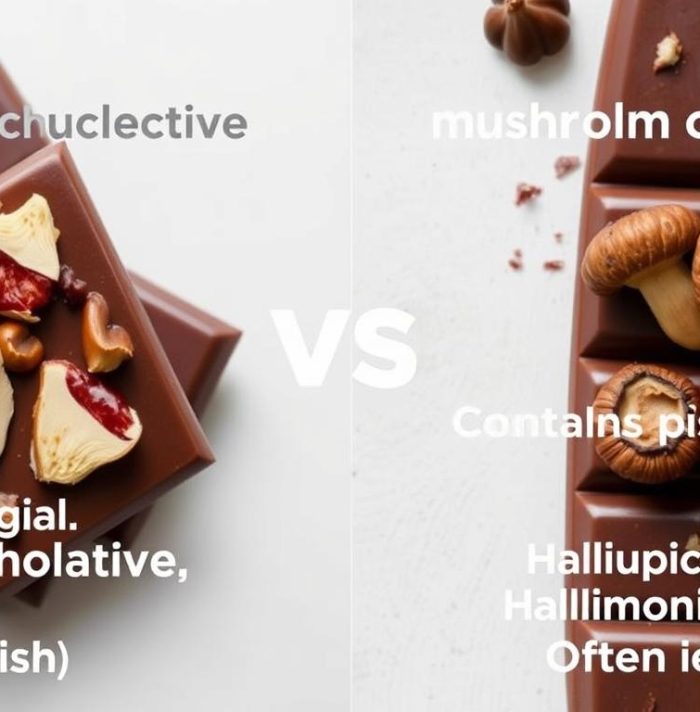
The growing popularity of mushroom-infused products has created confusion between regular mushroom chocolate and psychedelic mushroom chocolate. These two products may look similar but have fundamentally different ingredients, effects, legal status, and safety profiles. This guide clarifies the key differences to help consumers make informed choices and avoid potentially dangerous misconceptions.
Visual comparison of regular mushroom chocolate vs psychedelic mushroom chocolate highlighting their key differences
What is Mushroom Chocolate? Defining Both Varieties
Regular Mushroom Chocolate
Regular mushroom chocolate combines cacao with non-psychoactive functional mushrooms like reishi, lion’s mane, chaga, or cordyceps. These products are designed for their potential health benefits rather than mind-altering effects. The mushrooms used are legal, widely available, and increasingly popular in the wellness industry for their purported immune-boosting, cognitive-enhancing, and adaptogenic properties.
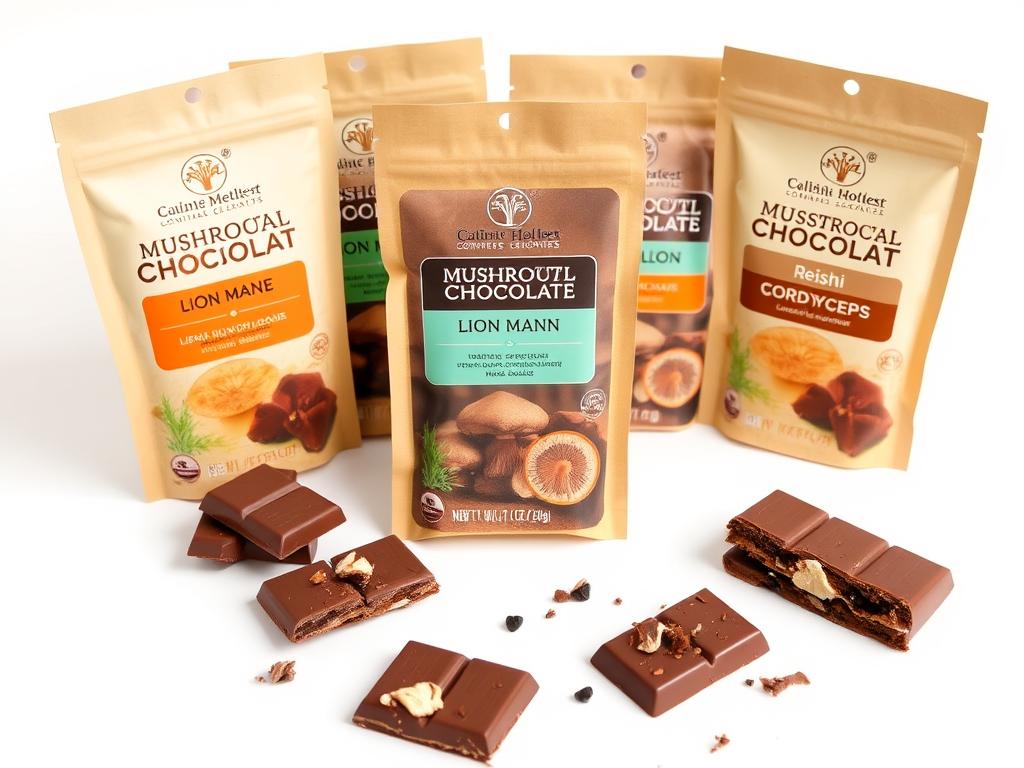
Commercial functional mushroom chocolate products containing non-psychoactive mushrooms like lion’s mane and reishi
Psychedelic Mushroom Chocolate
Psychedelic mushroom chocolate, also known as magic mushroom chocolate or shroom chocolate, contains psilocybin-containing mushrooms mixed with chocolate. Psilocybin is a naturally occurring psychedelic compound that produces mind-altering effects including hallucinations, altered perception of time, and changes in consciousness. These products are often made to mask the bitter taste of psychedelic mushrooms and provide a more palatable way to consume them.
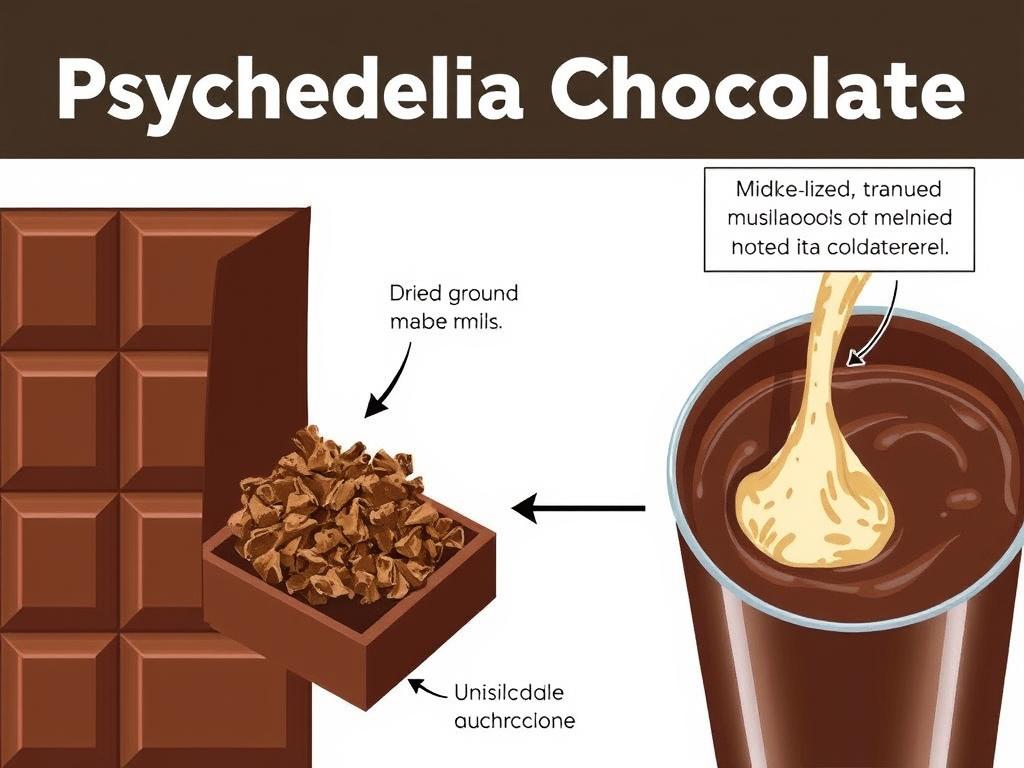
Educational illustration showing how psilocybin mushrooms are incorporated into chocolate
Key Differences Between Mushroom Chocolate and Psychedelic Mushroom Chocolate
| Characteristic | Regular Mushroom Chocolate | Psychedelic Mushroom Chocolate |
| Primary Ingredients | Chocolate + functional mushrooms (reishi, lion’s mane, cordyceps, etc.) | Chocolate + psilocybin-containing mushrooms |
| Effects | Non-psychoactive; potential wellness benefits | Psychoactive; causes hallucinations and altered perception |
| Legal Status | Legal in most countries; sold openly | Illegal in most regions; Schedule I substance in the US |
| Purpose | Wellness supplement, potential health benefits | Recreational use, spiritual experiences, potential therapeutic use |
| Availability | Health food stores, online retailers, specialty shops | Underground market, limited legal access in specific regions |
| Safety Profile | Generally recognized as safe when properly sourced | Potential risks including psychological distress, unpredictable effects |
Ingredients: What’s Actually in These Products?
Regular Mushroom Chocolate Ingredients
Functional mushroom chocolates typically contain:
- Chocolate (dark, milk, or white)
- Mushroom extracts or powders from varieties like:
- Lion’s mane (for cognitive function)
- Reishi (for immune support)
- Chaga (for antioxidant properties)
- Cordyceps (for energy and stamina)
- Turkey tail (for immune support)
- Sweeteners (sugar, honey, maple syrup)
- Additional flavors (vanilla, cinnamon, etc.)
- Sometimes other adaptogens or herbs
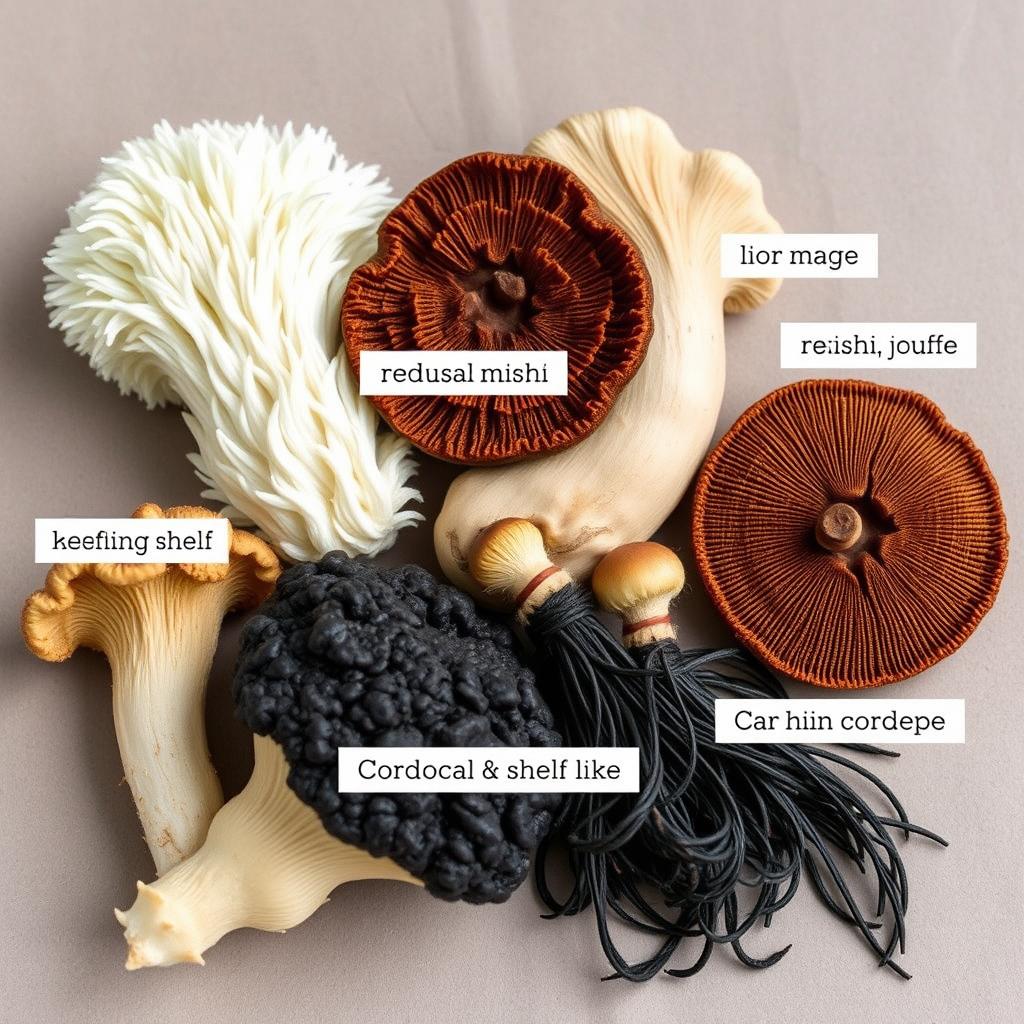
Common functional mushroom varieties used in regular mushroom chocolate
Psychedelic Mushroom Chocolate Ingredients
Psychedelic mushroom chocolates typically contain:
- Chocolate (usually dark or milk to mask flavor)
- Dried, ground psilocybin-containing mushrooms, such as:
- Psilocybe cubensis (most common)
- Psilocybe semilanceata (Liberty Caps)
- Other psilocybin-containing species
- Sometimes additional flavorings to mask mushroom taste
- Occasionally other psychoactive compounds
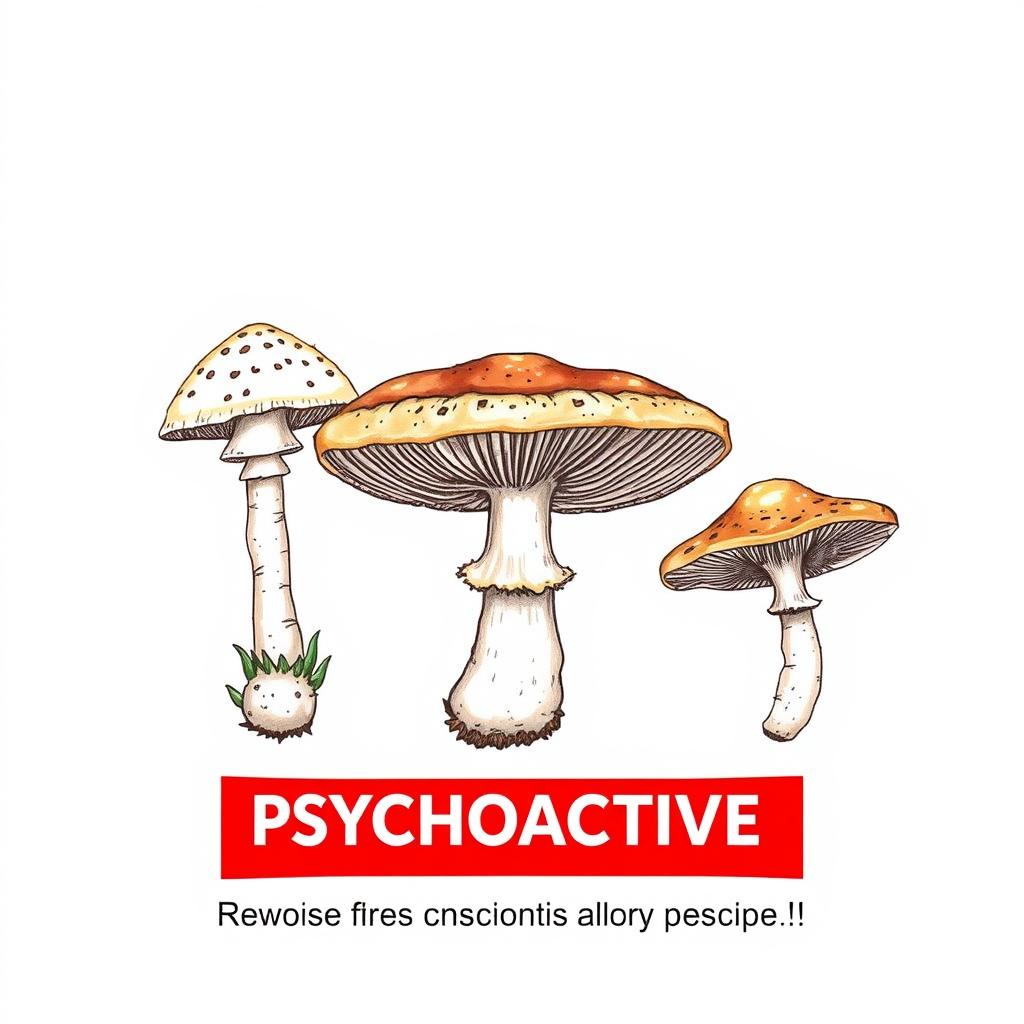
Common psilocybin mushroom varieties used in psychedelic mushroom chocolate (educational purposes only)
Know What You’re Consuming
Understanding the ingredients in mushroom products is crucial for your safety. Always verify the contents of any mushroom chocolate product before consumption.
Effects and Purpose: Why People Use Each Type
Regular Mushroom Chocolate: Potential Health Benefits

Regular mushroom chocolate is often incorporated into wellness routines for potential health benefits
Regular mushroom chocolate is primarily consumed for its potential health benefits. These products are part of the functional food movement, where everyday foods are enhanced with ingredients believed to offer health advantages. Users typically don’t experience any mind-altering effects, making these products suitable for daily consumption.
Claimed Benefits of Functional Mushroom Chocolate:
Cognitive Support
Lion’s mane mushroom is believed to support brain health, focus, and memory. Some research suggests it may promote nerve growth factor production.
Immune Function
Reishi, turkey tail, and chaga mushrooms contain beta-glucans and other compounds that may help modulate immune system function and response.
Stress Adaptation
Many functional mushrooms are classified as adaptogens, substances that may help the body resist various stressors and maintain balance.
Important Note: While many functional mushrooms have been used in traditional medicine systems for centuries, scientific research on their benefits is still emerging. The FDA has not evaluated most claims about functional mushroom products.
Psychedelic Mushroom Chocolate: Mind-Altering Effects
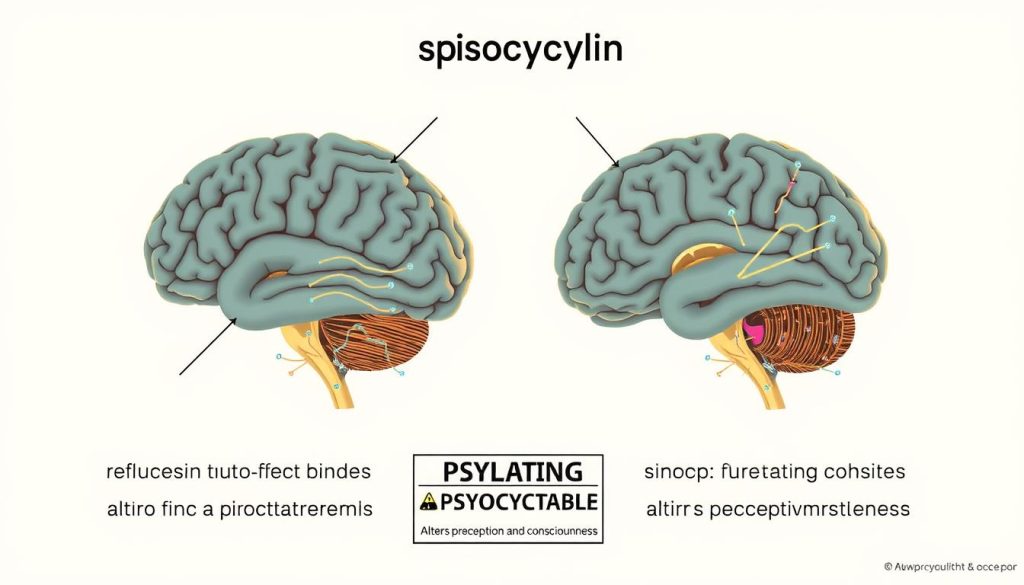
Educational illustration of how psilocybin affects brain function and perception
Psychedelic mushroom chocolate is consumed specifically for the mind-altering effects of psilocybin. When ingested, psilocybin converts to psilocin in the body, which acts on serotonin receptors in the brain, particularly the 5-HT2A receptor, leading to significant changes in perception, mood, and cognition.
Effects of Psychedelic Mushroom Chocolate:
Perceptual Changes
Visual and auditory hallucinations, enhanced colors, patterns, and sensory experiences. Objects may appear to breathe or move.
Cognitive Effects
Altered thought patterns, introspection, philosophical thinking, and changes in how time is perceived. May include profound personal insights.
Emotional Effects
Range from euphoria and connectedness to anxiety or fear. Emotions may be intensified and more labile during the experience.
Warning: Psychedelic experiences can be unpredictable and intense. Effects vary greatly based on dosage, individual physiology, mindset, and environment. Psychedelic substances can trigger anxiety, panic, or psychologically challenging experiences.
Legal Status and Regulations
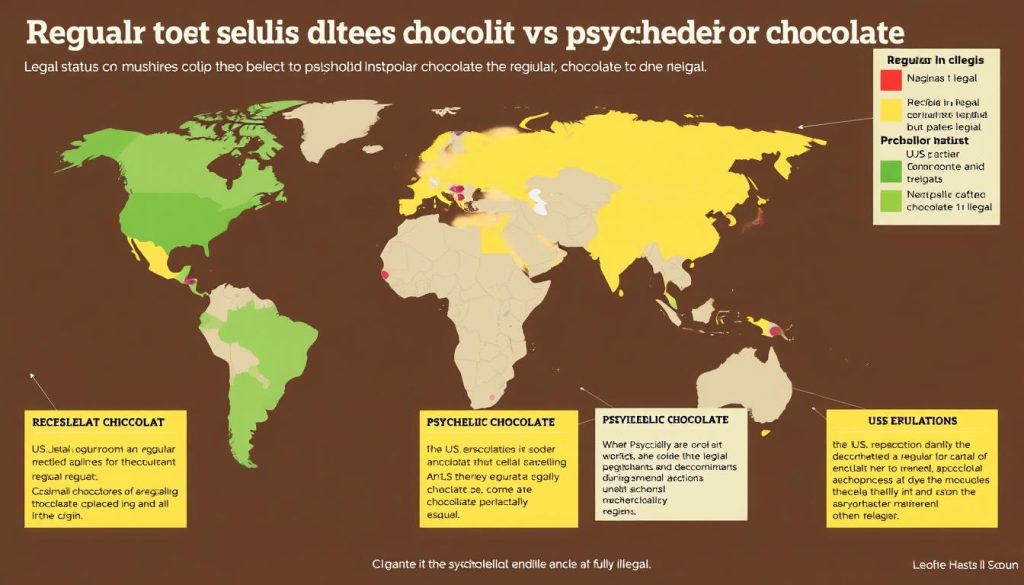
Global legal status comparison between regular mushroom chocolate and psychedelic mushroom chocolate
Regular Mushroom Chocolate Legal Status
Functional mushroom chocolates containing non-psychoactive mushrooms like reishi, lion’s mane, and cordyceps are legal in most countries worldwide. These products are typically regulated as food or dietary supplements rather than controlled substances. However, they must still comply with:
- Food safety regulations
- Accurate labeling requirements
- Restrictions on health claims (varies by country)
- Manufacturing standards for food products
In the United States, functional mushroom products fall under FDA regulation as dietary supplements or food additives, depending on their formulation and marketing.
Psychedelic Mushroom Chocolate Legal Status
Psilocybin, the active compound in psychedelic mushrooms, is classified as a Schedule I controlled substance in the United States and is illegal in most countries worldwide. This classification extends to any products containing psilocybin, including chocolate bars or other edibles.
Notable Exceptions and Changing Landscape:
- Oregon has legalized psilocybin for therapeutic use in supervised settings
- Colorado has decriminalized personal use of psilocybin
- Several cities have decriminalized psilocybin, including:
- Denver, Colorado
- Oakland, California
- Santa Cruz, California
- Ann Arbor, Michigan
- Washington, D.C.
- The Netherlands allows sale of psilocybin truffles (but not mushrooms)
- Jamaica and some other countries have no specific laws against psilocybin
Legal Warning: Even in places with decriminalization, manufacturing and selling psychedelic mushroom chocolate may still carry serious legal penalties. Decriminalization typically applies only to personal possession of small amounts.
Stay Informed About Local Regulations
Laws regarding psychedelic substances are rapidly evolving. Always verify the current legal status in your specific location before purchasing or consuming any mushroom products.
Safety Considerations and Risks
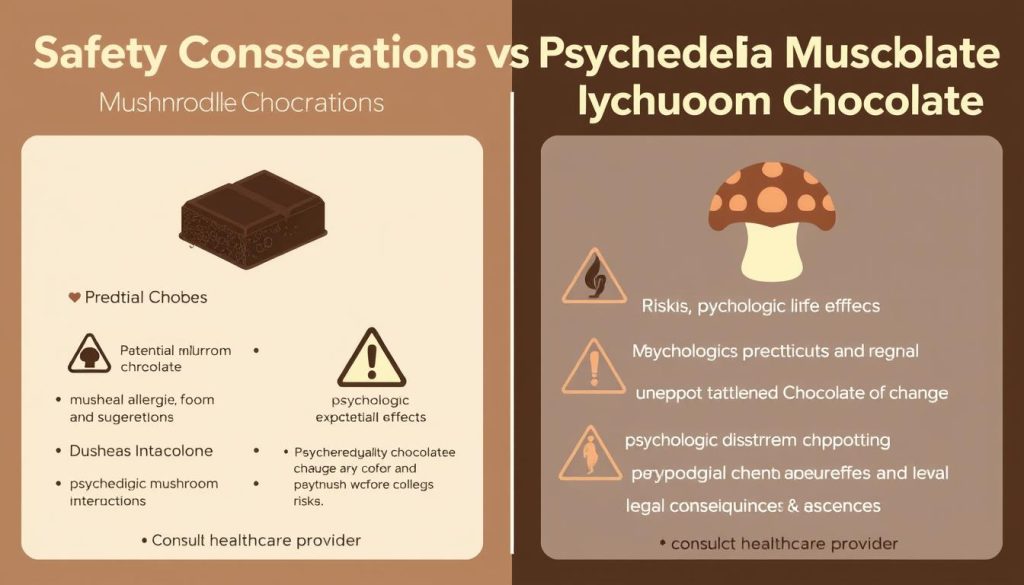
Safety comparison between regular mushroom chocolate and psychedelic mushroom chocolate
Regular Mushroom Chocolate Safety Profile
Functional mushroom chocolates generally have a good safety profile when properly sourced and manufactured. However, there are still some considerations:
Safety Considerations
- Generally recognized as safe for most people
- Non-psychoactive; doesn’t impair judgment or perception
- Can typically be consumed daily
- Regulated as food products in most regions
- Transparent labeling of ingredients in commercial products
Potential Concerns
- Possible allergic reactions to mushroom components
- Quality and potency can vary between manufacturers
- May interact with certain medications
- Some products make unverified health claims
- Limited regulation of supplement industry in some regions
Psychedelic Mushroom Chocolate Risks
Psychedelic mushroom chocolate carries significantly more risks due to its psychoactive nature and legal status:
Risk Reduction Strategies
- Starting with very low doses if used
- Having a sober, trusted person present
- Creating a safe, comfortable environment
- Avoiding use with other substances
- Researching thoroughly before considering use
Significant Risks
- Unpredictable psychological effects
- Potential for anxiety, panic, or “bad trips”
- Impaired judgment leading to accidents
- Unknown potency in unregulated products
- Legal consequences in most jurisdictions
- Possible contamination with other substances
- Risk of triggering underlying mental health conditions
Important Safety Warning: Psychedelic substances can have profound psychological effects and are not suitable for everyone. Individuals with a personal or family history of psychosis, schizophrenia, bipolar disorder, or certain other mental health conditions should avoid psychedelic substances, as they may trigger or worsen these conditions.
Common Misconceptions About Mushroom Chocolate
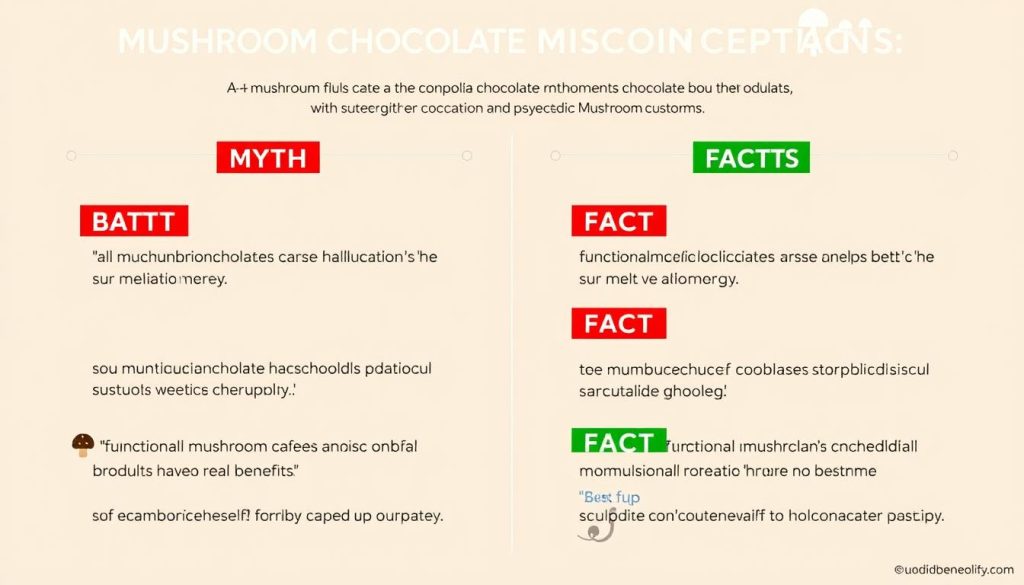
Debunking common myths about mushroom chocolate products
Misconception: All mushroom chocolates contain psychedelic ingredients
Reality: The vast majority of commercially available mushroom chocolates contain only non-psychoactive functional mushrooms like reishi, lion’s mane, and cordyceps. These products are designed for potential health benefits, not mind-altering effects. Psychedelic mushroom chocolate is a separate category that is not legally sold in most retail environments.
Misconception: Functional mushroom chocolate will get you “high”
Reality: Regular mushroom chocolate containing functional mushrooms like reishi or lion’s mane does not produce any psychoactive or intoxicating effects. These products do not contain psilocybin or other psychedelic compounds. Any claims that functional mushroom products produce a “high” are misleading.
Misconception: Psychedelic mushroom chocolate is safe because it’s “natural”
Reality: While psilocybin does occur naturally in certain mushrooms, “natural” does not automatically mean safe. Psychedelic mushroom chocolate can produce unpredictable and intense psychological effects. Additionally, in unregulated markets, there’s no quality control to ensure the product contains only what is claimed or that dosing is consistent.
Misconception: All mushroom chocolate products have proven health benefits
Reality: While functional mushrooms have been used in traditional medicine for centuries, scientific research on many claimed benefits is still preliminary. Some benefits have stronger evidence than others, but many claims made by manufacturers have not been evaluated by the FDA or conclusively proven in clinical studies.
How to Identify What You’re Getting
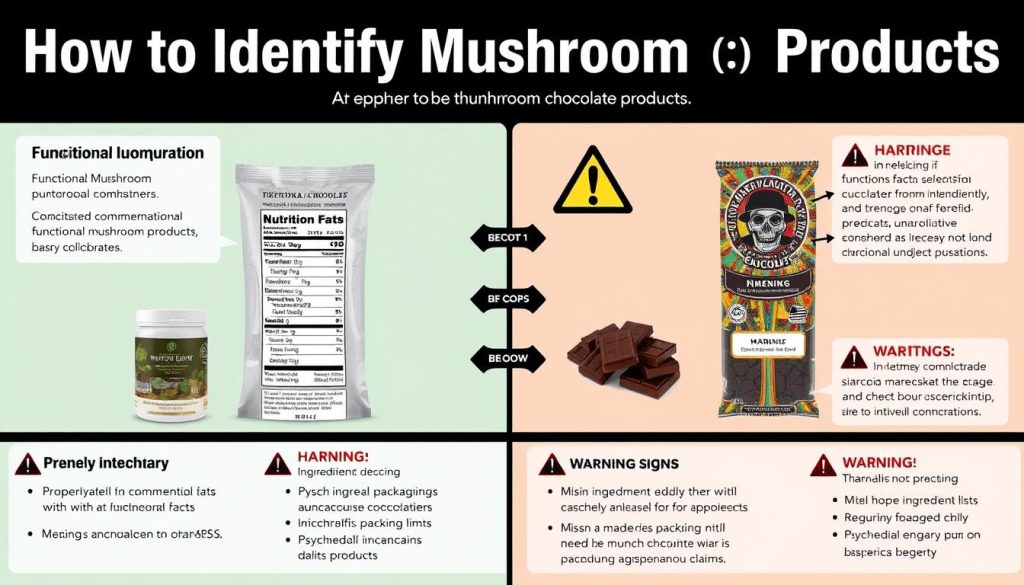
Visual guide to identifying different types of mushroom chocolate products
Identifying Regular Functional Mushroom Chocolate
Legitimate functional mushroom chocolate products typically have these characteristics:
- Professional packaging with clear branding
- Complete ingredient list specifying mushroom species
- Nutrition facts panel
- Manufacturer contact information
- Specific functional claims (e.g., “supports immune function”)
- Available in mainstream retail channels
- No mentions of psychedelic effects
- Often includes specific mushroom extract amounts
- May have third-party testing certifications
Recognizing Psychedelic Mushroom Chocolate
Psychedelic mushroom chocolate products often have these characteristics:
- Sold through unofficial channels
- May have homemade or basic packaging
- Often lacks complete ingredient information
- May use psychedelic imagery or slang terms
- References to “trips,” “journeys,” or mind-altering effects
- Dosage information related to psychedelic effects
- No manufacturer details or limited information
- No FDA-compliant nutrition labeling
- May use code words or euphemisms
Verify Before You Buy
When purchasing mushroom chocolate products, always verify the manufacturer, check for complete ingredient information, and research the specific mushroom varieties included.
The Growing Popularity of Functional Mushroom Chocolates

Market growth of functional mushroom products from 2018-2023
Functional mushroom chocolates have seen tremendous growth in popularity over the past few years, driven by increasing consumer interest in natural wellness products, adaptogens, and functional foods. This trend aligns with broader movements toward preventative health, immune support, and cognitive enhancement through nutrition.
Popular Functional Mushroom Varieties and Their Claimed Benefits

Lion’s Mane
Claimed to support cognitive function, nerve health, and mental clarity. Some research suggests it may promote nerve growth factor (NGF) production, which could support brain health.
Reishi
Traditionally used to support immune function and promote relaxation. Contains beta-glucans and triterpenes that may help modulate immune response and reduce inflammation.

Cordyceps
Associated with energy, stamina, and athletic performance. Some studies suggest it may improve oxygen utilization and support cellular energy production.
Scientific Evidence Behind Functional Mushroom Claims
While functional mushrooms have been used in traditional medicine systems for centuries, scientific research on their benefits is still developing. The current state of evidence varies by mushroom type and claimed benefit:
Note on Evidence: Most research on functional mushrooms has been conducted in laboratory settings or small clinical trials. Larger, long-term human studies are still needed to confirm many of the claimed benefits. Always consult healthcare providers before using mushroom supplements for specific health conditions.
Frequently Asked Questions
Can regular mushroom chocolate get you high?
No, regular functional mushroom chocolate containing mushrooms like reishi, lion’s mane, or cordyceps cannot get you high. These mushrooms do not contain psilocybin or other psychoactive compounds. They are non-intoxicating and legal for consumption. Any product marketed as regular mushroom chocolate that produces psychoactive effects likely contains undisclosed ingredients.
Are psychedelic mushroom chocolates safe for consumption?
Psychedelic mushroom chocolates carry significant risks. The effects can be unpredictable and intense, potentially causing psychological distress. Additionally, in unregulated markets, there’s no quality control to ensure consistent dosing or prevent contamination. From a legal perspective, they remain illegal in most jurisdictions. While some research suggests potential therapeutic benefits of psilocybin in controlled clinical settings, recreational use carries both health and legal risks.
How can consumers verify the contents of mushroom chocolate products?
For commercial functional mushroom chocolates, look for products from reputable manufacturers that provide detailed ingredient lists, specify mushroom species and amounts, and ideally offer third-party testing results. Legitimate products should have proper labeling including nutrition facts, manufacturer information, and batch numbers. Be wary of products making extraordinary claims, using psychedelic imagery, or sold through unofficial channels. When in doubt, research the company and look for transparency in their manufacturing processes.
What is the difference in taste between regular and psychedelic mushroom chocolate?
Regular functional mushroom chocolate often has a mild earthy flavor that blends well with chocolate, though the taste varies depending on the mushroom varieties used and their concentration. High-quality products balance the mushroom flavor with chocolate so it’s not overwhelming. Psychedelic mushroom chocolate typically has a more pronounced bitter, earthy taste from the psilocybin mushrooms, which is why chocolate is used to mask this flavor. The chocolate helps make the otherwise unpleasant taste of dried psychedelic mushrooms more palatable.
Are there any regions where psychedelic mushroom chocolate is legal?
Psychedelic mushroom chocolate containing psilocybin is legal or decriminalized in a limited number of places. Oregon has legalized psilocybin for therapeutic use in supervised settings. Several cities in the US have decriminalized personal possession, including Denver, Oakland, and Washington D.C. Countries like Jamaica have no specific laws against psilocybin, while the Netherlands permits psilocybin truffles (but not mushrooms). However, even in these places, commercial production and sale often remain restricted or regulated. Laws are rapidly evolving, so it’s essential to verify current local regulations.
Conclusion: Making Informed Choices

Making informed choices about mushroom chocolate products requires careful label reading and research
Understanding the fundamental differences between regular mushroom chocolate and psychedelic mushroom chocolate is essential for consumer safety, legal compliance, and making informed choices. While functional mushroom chocolates offer potential wellness benefits without psychoactive effects, psychedelic mushroom chocolate contains psilocybin that causes significant mind-altering effects and carries both legal and safety risks.
As the popularity of mushroom products continues to grow, so does the importance of consumer education. Always verify what you’re purchasing, understand the ingredients, and be aware of the legal status in your region. For those interested in the potential health benefits of functional mushrooms, seek products from reputable manufacturers with transparent practices and reasonable claims.
Whether you’re exploring functional mushrooms for wellness or simply curious about the differences between these products, prioritizing safety and accurate information will help you navigate this expanding market with confidence.
Stay Informed and Safe
The world of mushroom products is constantly evolving. Keep yourself updated with the latest research, regulations, and safety information.
